Skip to content

Central concern

Authorship within constraint.

Agency is the trainable capacity to read present conditions, choose among viable responses, carry a choice into conduct, and learn from what follows. Its field may be wide or painfully narrow. It is never identical to total freedom or guaranteed success.

A maintained structure within a degrading field

01 / Distinction

Control / Agency

Authorship does not guarantee the outcome.

Preparation can improve an outcome without securing it. Constraint can reduce available action without erasing a person’s dignity.

Control
Tries to command the result.
Agency
Selects and owns a response within available conditions.
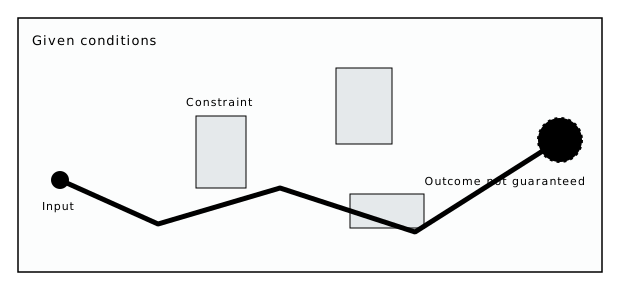
Available routes around constraints; outcome not guaranteed
Input
Constraint
Selected route
Outcome not guaranteed

Select an available route

Selected conduct: Revise the structure when evidence shows that conditions—or your understanding of them—have changed.

Selected conduct: Maintain what still serves the chosen standard.

Selected conduct: Release what can no longer be tended responsibly.

Conditions bound part of the field. Agency concerns the routes that remain genuinely selectable; it does not command what follows.

02 / Four capacities

Functions across the sequence

Agency must survive translation into conduct.

Agency is exercised through four linked capacities. Discernment and Selection operate within the Interval. Execution carries the Selected Output into conduct. Integration uses consequences to revise the next cycle.

01

Discernment

Read conditions with as little distortion as possible within the Interval.

02

Selection

Choose within the Interval among options that are actually available.

03

Execution

Carry the Selected Output into sustained conduct.

04

Integration

Use consequences to revise the next cycle.

03 / Context

Agency is contextual, not moral theater.

Illness, coercion, poverty, trauma, disability, institutional design, care needs, and the choices of others can narrow a person’s field of action. AEVITAS does not recast imposed suffering as training or treat unequal capacity as unequal worth. It asks what authorship remains possible and what changes in the surrounding structure would make more of it possible.

Scroll to Top